What’s it like to go to work everyday?
Of course it varies enormously, but by measuring engagement, you can calibrate any variety of jobs and roles against each other. At Omnicor we do this regularly.
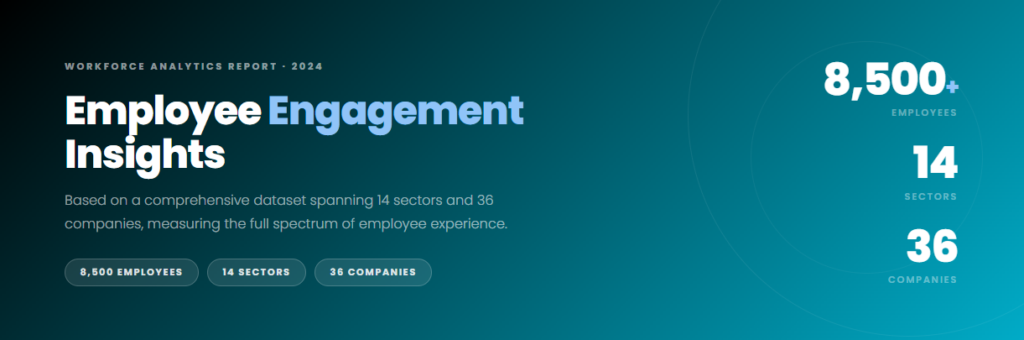
Looking at a recent dataset comprising about 8500 individuals across 14 sectors and 36 companies we have observed the following:
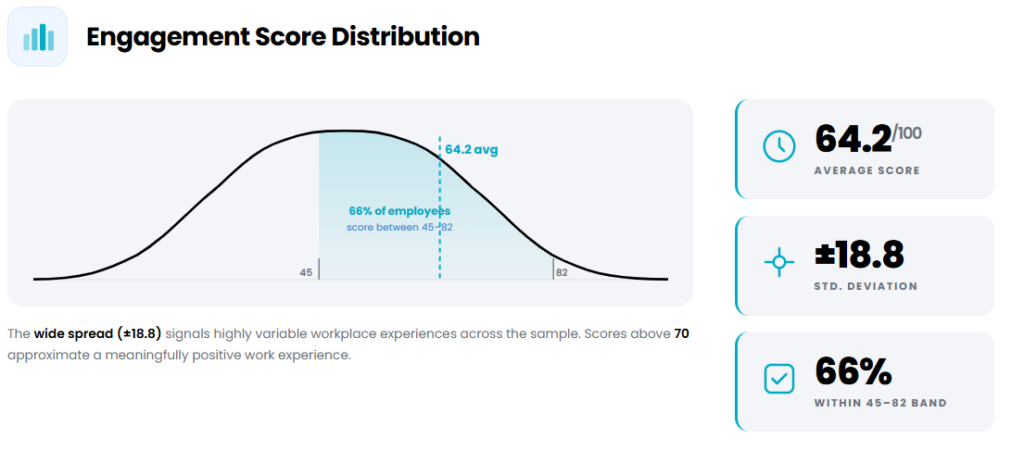
1. Engagement is widely distributed.
With engagement scores ranging from 1 to 100, the average score was 64.2 and a std deviation of 18.8. That means about 66% of people fall between 45 and 82. That is a wide standard deviation and it suggests that the middle experience of work ranges from pretty miserable to almost euphoric. The mean score itself, 64.2, is somewhere above lukewarm, but not quite reaching satisfying. I would argue that scores above 70 start getting into a positive work experience. For many people work is more of a chore than anything, but its not a terrible chore. It leans positive, and is something they can manage pretty well each day.
2. Very few are toxically disengaged.
Only 5.5% of people scored at 30 or below. These people do not want to be where they are currently and they would be likely to leave if something else came up. There are complex reason’s why someone may be miserable. They could have conflict with their manager or colleagues, they could be overworked and burnt out. Many possible causes. One way or another their passion for work would probably have died and their effect on other people is unlikely to be positive.
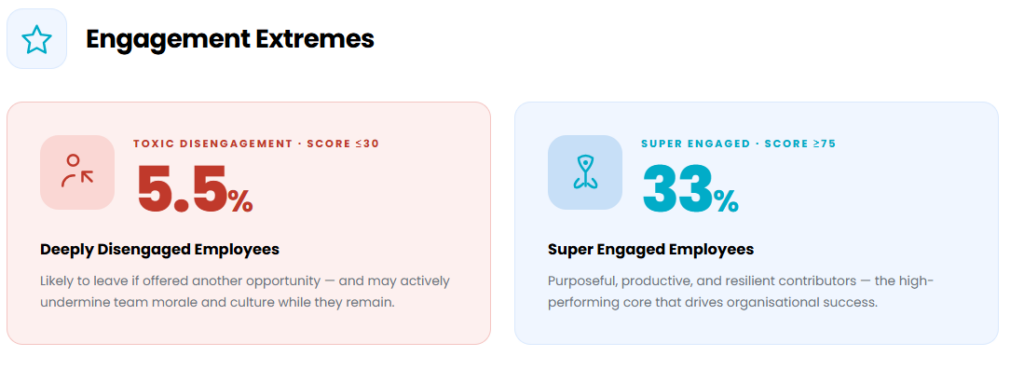
3. A substantial group are super happy.
Close to one third of people scored 75 and above. This suggests that they are super satisfied with being employed where they are. In all likelihood they feel purposeful, enjoy their relationships at work and see work as a positive experience. Engaged staff are a blessing. They generally try hard, form solid relationships and are open to feedback and growth.
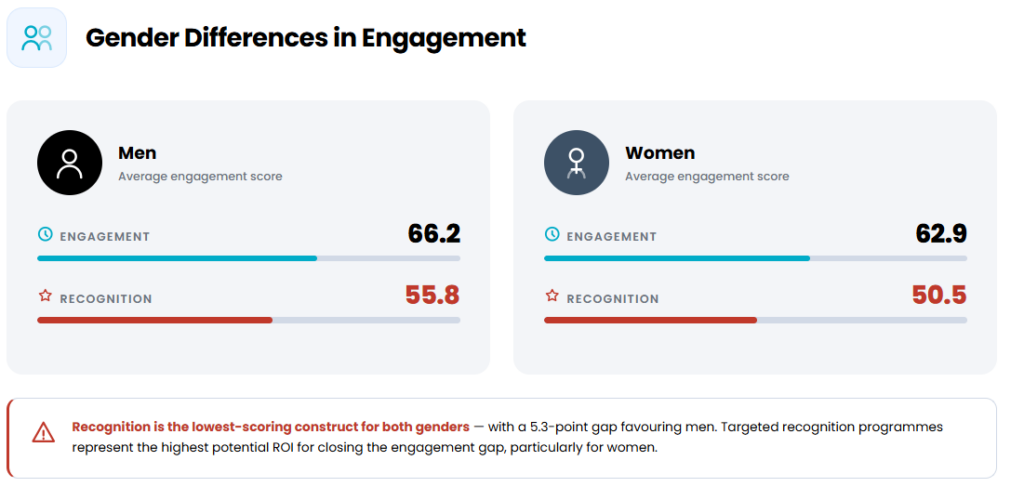
4. There were some gender differences.
Men were slightly more engaged at work (66.2) than women (62.9). Perhaps more importantly the biggest difference between men and women was on the construct of Recognition. Both genders had this is their lowest construct score (clearly people don’t get enough acknowledgement at work) but while men scored 55.8 Women only scored at 50.5. In contrast, the smallest gender difference was regarding work demands such a cadence and load. Men and women appear to feel equal demand at work, with most people struggling to keep up with what they need to do.
5. There is a clear honeymoon phase.
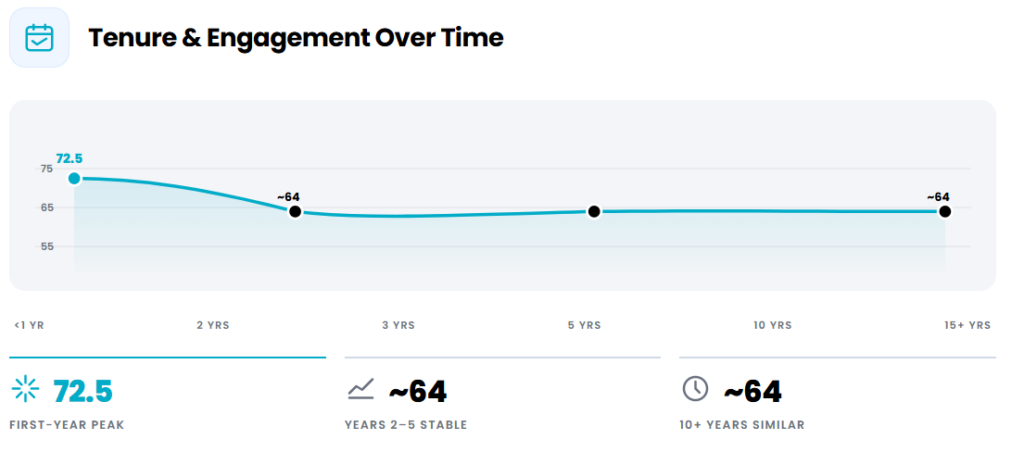
Looking at tenure, the first year turned out to have the highest engagement score – 72.5. From then on, at some point in the 2nd to 5th year it settles on average around the 64 mark. Even those with more than 10 years of service showed similar results.
6. It gets slightly worse with age, then a bit better.
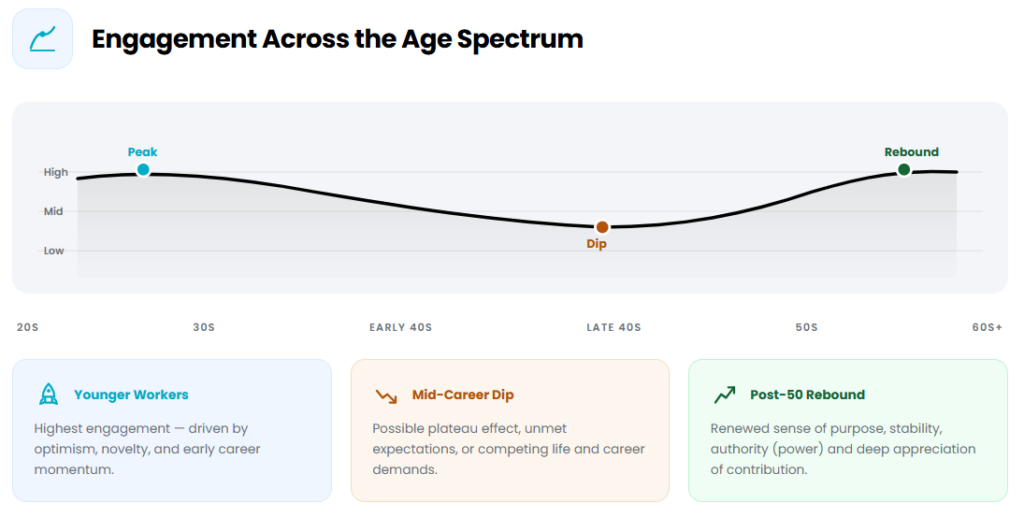
Aligned to tenure, work is never as good as when you are young. A bit surprising given that newbies often get the worst of the grunt work. Perhaps just having at job and earning money for the first time makes it feel good. As the decades pass, engagement declines slightly, then dips upwards after age 50. Perhaps by then people have some authority which makes it better.
Want to learn more?
Connect with our Organisational Development team for tailored support in planning and implementing your next engagment initiative.
Product Page: https://omnicor.co/employee-engagement-surveys/
Author: Hilton Rudnick