Employee Engagement Surveys

The Engagement Survey is an online, effective measure of how engaged your staff members are.

Your early warning system to identify and intervene when talented people become disengaged.

Need More Info? Download Sample Report
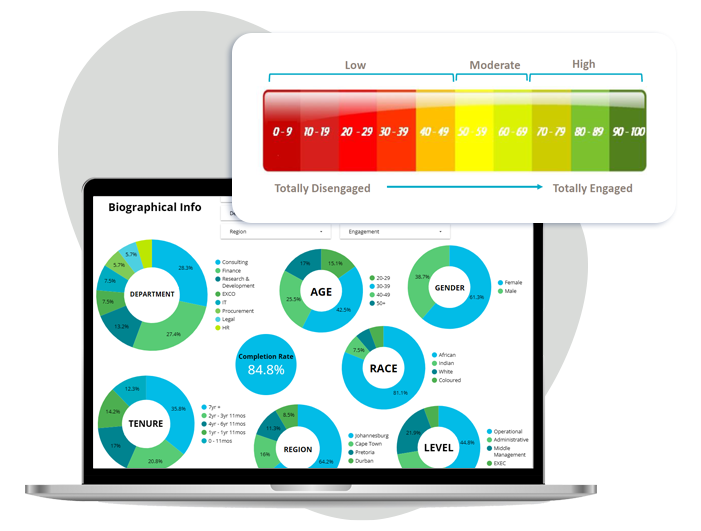
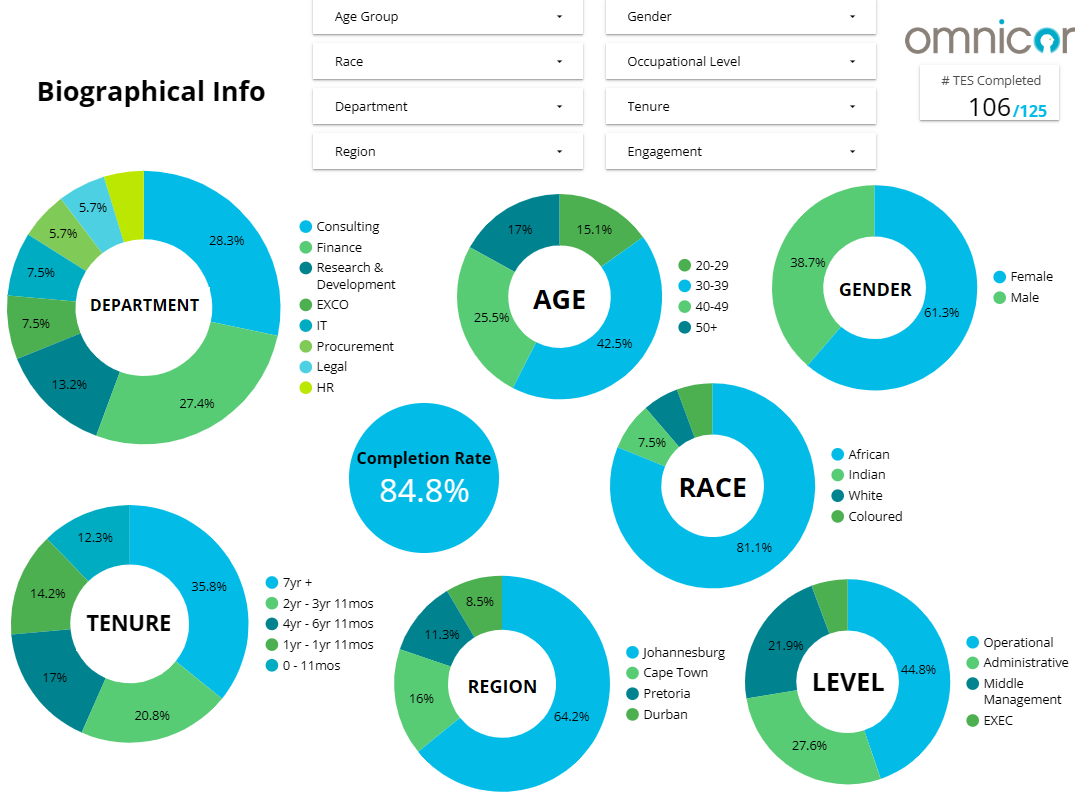
Illustration of an employee engagement survey dashboard

Some of our Clients

Sample Employee Engagement Survey report

Our Methodology

  • Local research with more than 15000 employees from across different industries to provide a benchmark for your organisation
  • Leaders and managers get access to personalised, easy-to-understand insights that are actionable and meaningful
  • Segmented dashboards help senior executives and managers know exactly where to focus
  • We integrate focus groups with the survey to gather rich, meaningful qualitative data from randomly selected groups. This combination provides a comprehensive understanding of the feedback
  • Meaningful observations and recommendations are an important output of the Engagement Survey

Watch our Employee Enagegement Survey Demo

Reports & Feedback

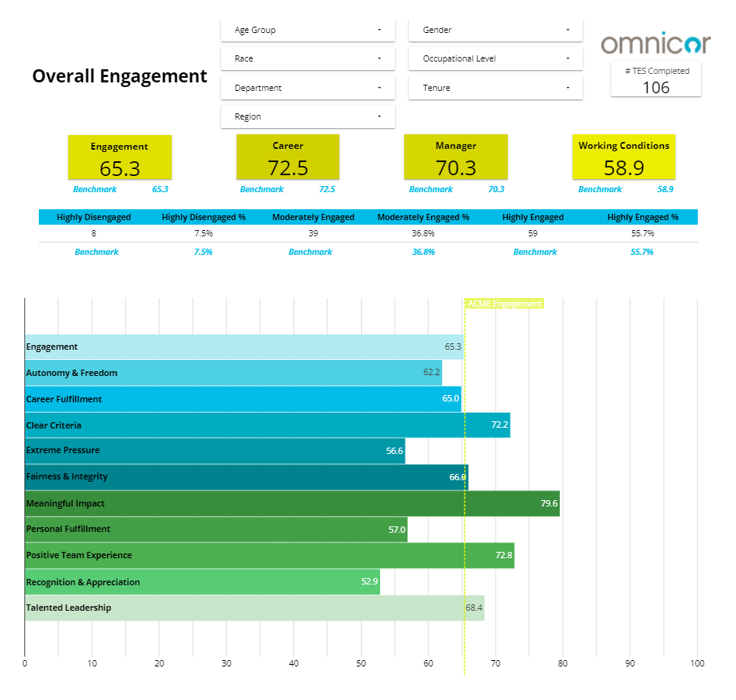
Interactive employee engagement survey dashboard screenshot
Interactive Dashboards

An Interactive Dashboard can be created to present your results for easy analysis.

Departmental/ Group access can be provided, allowing managers the access to their team engagement data.

Download Sample Report

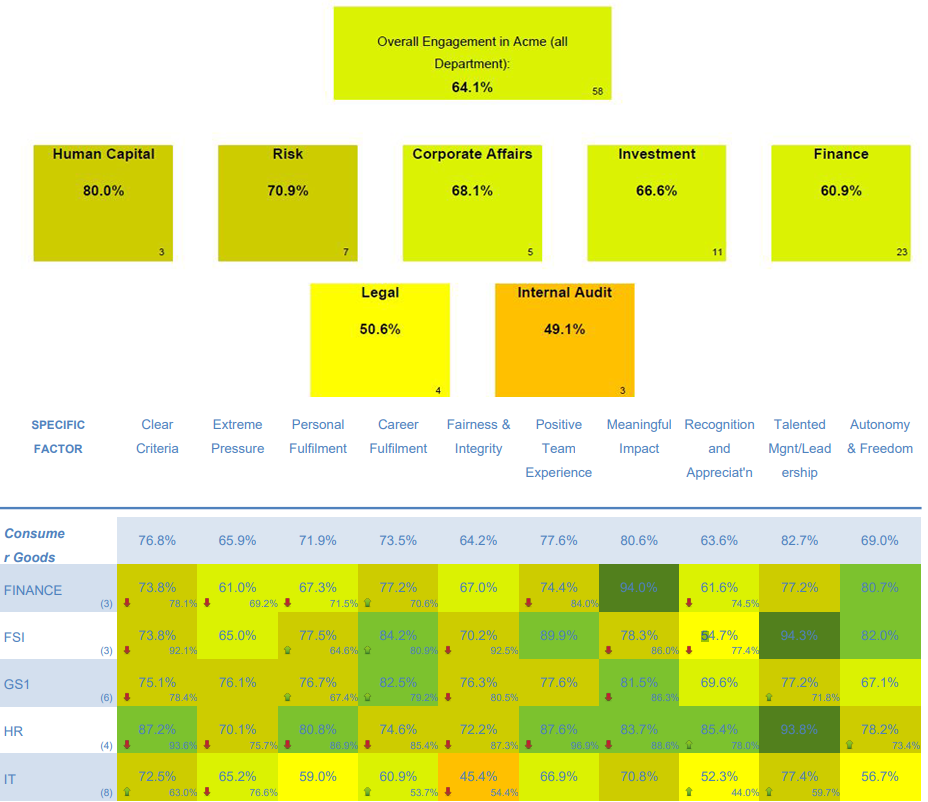
Employee engagement survey heat map report screenshot
Heat Maps

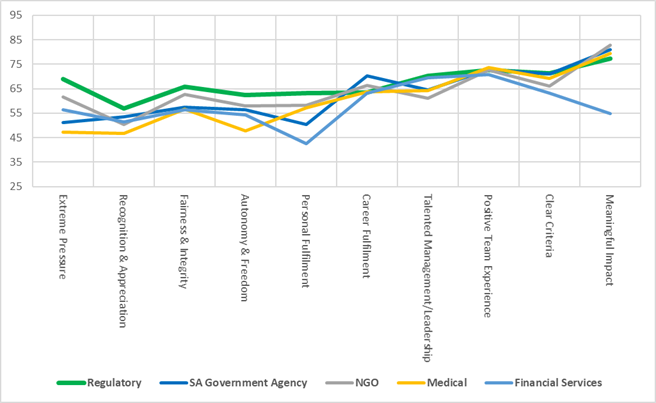
Results are presented in heat maps for easy analysis, segmented by any demographics that are meaningful to your business, e.g. gender; tenure; level; job title; departments and race.

To ensure confidentiality, only group-based data will be shared.

To further protect staff identity, we do not show any results for demographic groups of 4 people or less.

Organisational employee engagement report screenshot
Organisational Reports

Based on the survey results, Omnicor will summarise and interpret the results and provide recommendations to drive engagement.

Should further reports be required these will be costed for as per the number of reports required.

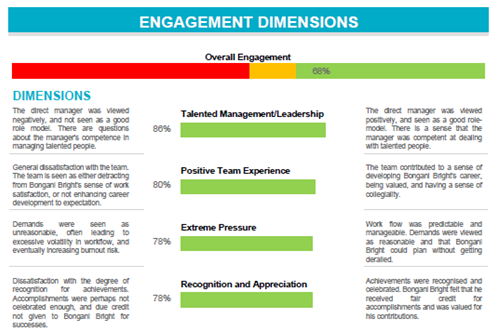
Individual employee engagement report screenshot
Individual Reports

Individual Employee Engagement Survey reports can be made available to each staff member.

This request is handled directly through Omnicor to protect confidentially.

This report is helpful to use within the coaching and mentoring environments.

Make an Enquiry

Why Choose Omnicor

  • Over 22 years of experience in this field
  • Fast turnaround between completion and report
  • Value for money
  • Responsive and Outstanding Consulting with Tailored Solutions
  • Scientific approach
We offer the widest range of Tools

10 Engagement Factors

We have 10 factors which we believe constitute engagement and these form the basis for the survey. These 10 factors are measured through 40 questions on a 100-point scale. The survey is valid and reliable providing a statistically sound survey that is based on proven research. Questions are designed to support ease of understanding and completion. The constructs have demonstrated robust reliability, with statistically significant strength.

Clear Criteria

Personal Fulfilment

Career Fulfilment

Autonomy & Freedom

Recognition & Appreciation

Fairness & Integrity

Positive Team Experience

Talented Leadership

Extreme Pressure

Meaningful Impact

20 Additional questions

How does it all work?

Our Employee Enagement Approach & Platform

Communication Strategy

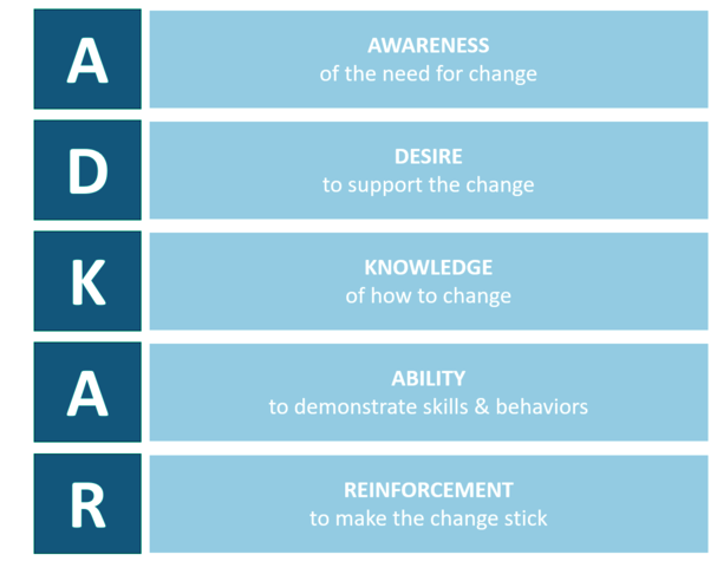
Throughout the implementation of the Employee Engagement Surveys, Omnicor will apply the ADKAR model created by PROSCI.

The Communication Strategy will include pre, during and post communications to successfully reach targeted survey participation rates.

Employee engagement survey communication strategy illustration

Invitation & Reminders

Omnicor will send the survey invitation and reminders to all staff via email and SMS. Omnicor is able to customise the frequency of reminder emails and SMSs sent to participants who have not yet completed the survey.

The email and SMS content will be edited based on the project requirements.

Survey invitation and reminder process illustration

Tracking & Monitoring

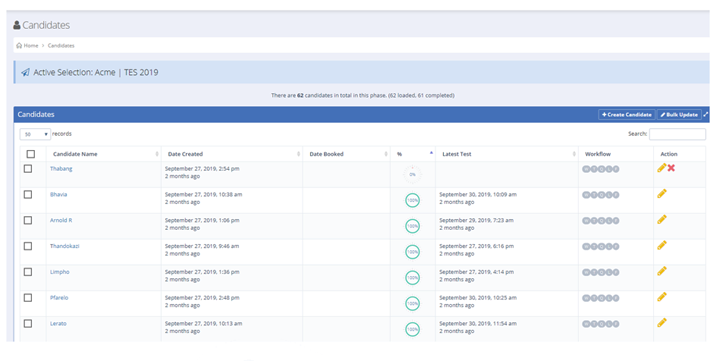
Omnicor tracks and monitors the survey completion rates, providing daily updates.

Omnicor strives for an overall completion rate of 80% to ensure robust data analysis across the various demographics/segments.

Survey completion tracking and monitoring illustration

Develop Engaged and High-Performing Teams

Let’s discuss what Omnicor can do for you.

Book a Meeting


Client Feedback

7,000+

Employees Surveyed this Year

80+

CLIENTS

200,000+

Employees Surveyed in total

Frequently Asked Questions

Answers for HR managers and for C-Suite and leadership on running an effective Employee Engagement Survey

01

For HR Managers

We recommend running an employee engagement survey annually, which provides year-on-year trend data and supports benchmarking. Running full surveys more than once a year risks survey fatigue without adding proportionate insight or allowing sufficient time for interventions to make an impact on organisational culture.

A well-designed survey covers various factors influencing engagement, including but not limited to career fulfilment, leadership quality, fairness, recognition, and autonomy. Tracking these over time allows companies to view changes in employee sentiment year on year, and see whether your initiatives made a difference.

While the Omnicor Employee Engagement Survey thoroughly covers these elements, we also recommend that you add custom questions to your engagement survey that are relevant to your context and that shed light on the areas that are important for you to understand.

Response rates of 70-80% are considered representative of overall organisational sentiment. At Omnicor, we aim for at least an 80% response rate. Improving response rate comes down to three levers:

  • Visible leadership sponsorship before launch
  • A survey that is easy to access and complete
  • A public commitment to share results and act on them

The single biggest driver of participation is proof that the last survey led somewhere.

While a company-wide score gives useful information, it is equally important to look at your data in a segmented way, as a strong overall number can hide a department that is struggling. Our engagement dashboards allow you to slice the data to see precisely where your pain points are. You also see what is going well, which tells you what to protect and continue. This information empowers you to identify the two or three drivers that need the most attention, to delve deeper into critical issues to understand what is behind the score, and to define priority actions.

Best practice principles also support holding a feedback session for employees where the key findings, opportunities for focus, and recommendations for future are shared. This closes the loop with staff and builds trust for the next survey cycle.

Benchmarking works in two directions:

  • Against the market. A sector benchmark shows how your scores compare with other organisations. This enables leadership to see engagement as a competitive matter, because the organisations you compare with are the ones competing for your people.
  • Against your own history. Your previous cycle is the most exact measure of progress you have. It uses the same question set, the same population and the same method, so the comparison is direct. It answers the question that matters most to your executive: did the actions we took last year work? This is also why we hold the core items stable between cycles.

Used together, the two views answer different questions. The sector benchmark tells you where you stand, while your own trend tells you whether you are improving over time.

No. Engagement is not the product of one manager. An employee's engagement is also shaped by career progression, reward, working conditions and the wider organisational climate. Much of that sits outside any single manager's control, so it is not fair to rate a manager on it.

There is also a practical risk. When the score becomes a manager's KPI, the manager works on the score instead of the cause. Pressure to answer well then follows, and you lose the honest data you were looking for in the first place. A more meaningful method is to incorporate engagement data into development conversations, alongside other evidence, with the aim of providing them with deeper insight into their staff's experiences at work.

One of the most important functions of senior leadership is the maintenance of a positive organisational culture. Engagement surveys provide a clear read on the prevailing culture. A positive culture is not an attempt to be charitable to staff, it is a business imperative. Effective cultures create a working environment in which people feel they can flourish at work. When this happens people feel safe, encouraged and proactive. This translates directly into productivity, better services and improved customer relations. The ultimate pay-off is an improved bottom line. Of course, culture is not the only element in this equation, but it is a key element, and one in full control of leadership.

02

For C-Suite and Leadership

An engagement survey gives you early warning, as disengagement generally appears in the survey data months before it appears in your turnover figures or your performance numbers. That lead time is the value. You can act while the problem is still small and still cheap to fix.

The survey also gives you evidence. Instead of debating what employees think, you know. You can see which parts of the business carry risk, and which parts are working well. This makes it easier to direct budget and management attention to the places where they will pay back.

The return comes from acting on employee feedback. A survey that runs once, with no follow-through and no action, will not show a measurable return.

Disengaged employees consistently show higher absenteeism, lower discretionary effort, and a materially higher likelihood of voluntary exit within 12 months. Engagement surveys let leadership identify which specific drivers (e.g. career growth, management quality, working conditions) are most predictive of risk in their own workforce, rather than relying on generic industry claims.

You look for movement in two places.

  • In the survey data. Compare each driver score against the previous cycle. The clearest signal is a rise in the specific drivers you targeted with an action plan. The signal is stronger when the teams that received a targeted plan improve more than the teams that did not.
  • In the business. Engagement is not a standalone measure. Research links higher engagement to stronger performance, both for the individual and for the organisation. As engagement improves, you should therefore see the effect beyond the survey report, in productivity, in retention and in the culture your leaders describe day to day.

In addition, participation itself tends to rise in the second and third cycles when employees see that action followed the first one. A rising response rate is a sign that staff believe the process is real.

While the survey itself carries little risk, the risk sits in how response data is collected, stored and reported. If you promise confidentiality and then fail to protect it, you lose employee trust faster than if you had never asked. In South Africa, POPIA also places clear duties on you for the handling of personal information.

Our process is designed to manage both risks:

  • Collection. Omnicor administers the survey as an independent third party. Each participant gives written consent that sets out the purpose of the survey, the data we process and store, and the fact that participation is voluntary. Our consent and confidentiality wording has been legally reviewed.
  • Storage. Responses are held on our own survey platform. Data is stored in South Africa. Access is limited to the Omnicor team working on your project.
  • Reporting. We report aggregated results only. No individual response is shared with management or HR. We never report a group of fewer than four people as a separate segment, so no result can be traced back to a person. Open-text answers are not reported word for word. We analyse them and report the themes.

Handled this way, the survey protects the employee and gives you a process your legal team can defend.

Yes, this information can be shared with the board. However, the real question is what level of detail serves the board. The board typically does not need the full breakdown of results at a granular level; they need the picture at a high level. This may include the overall engagement score, and its movement since the last cycle, the two or three drivers that carry the most risk, and what management intends to do to act on these. Detailed analysis by team and by driver belongs with HR and line management, because they are the people who act on it.

03

For Employees and Survey Participants

Yes. Although Omnicor knows who you are so that they can group the results under the correct demographic, your individual feedback will never be shared with your organisation. Omnicor only provides your organisation with the overall themes from the feedback. Omnicor will never show any results from a group of individuals of less than 4 individuals. Your comments will also never be shared verbatim with your organisation. Rather, only the themes evident across multiple employees' verbatim comments will be shared.

No, the employee engagement process will never use your individual responses in performance or disciplinary decisions. Rest assured that your individual responses will not be shared with your organization, and only overall themes from multiple employees will be reported on.

Omnicor will analyse and theme all data and will provide feedback to your organisation on the overall results. This often includes key priority areas, as well as areas to celebrate. Omnicor only provides your organisation with the overall themes from the feedback. Omnicor will never show any results from a group of less than 4 individuals.

Our engagement surveys are built to be completed in 15-20 minutes. Most rating-scale questions are answerable quickly; open-text questions are usually optional so you aren't forced to write extensive comments to complete the survey.